
What gauge means
What gauge means in body piercing jewelry
Gauge measures wire thickness in body jewelry. The scale runs in reverse, meaning higher numbers mark thinner metal posts and rings.
316L surgical steel · gauge and millimetres on every page
Body piercing jewelry maker
Our catalogue is organized by where each piece sits on the body. We stamp the exact gauge and post length or hoop diameter in millimetres on every page so you know the dimensions before ordering.
A look at the specific gauges and steel pieces that shoppers select most often across our lines.

$6.89 at our storefront
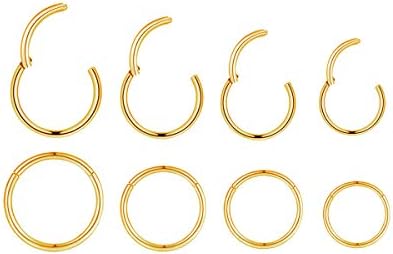
$9.99 at our storefront
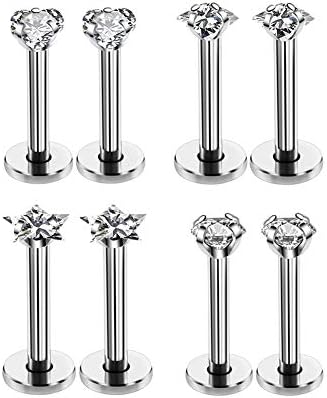
$8.99 at our storefront
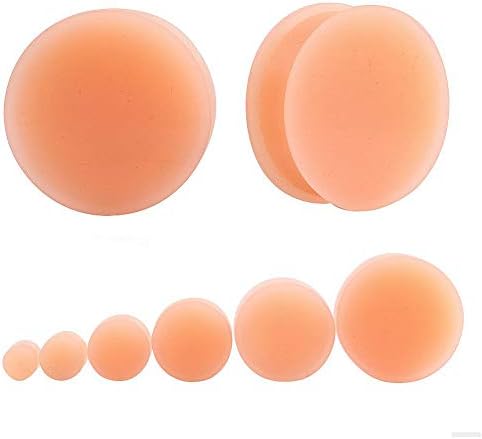
$7.80 at our storefront
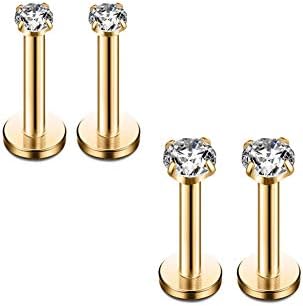
$7.99 at our storefront
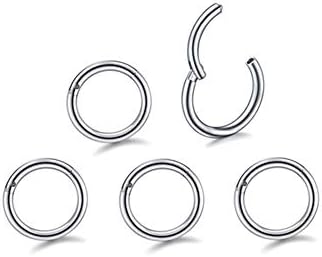
$8.89 at our storefront
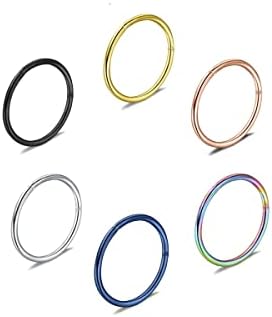
$8.99 at our storefront
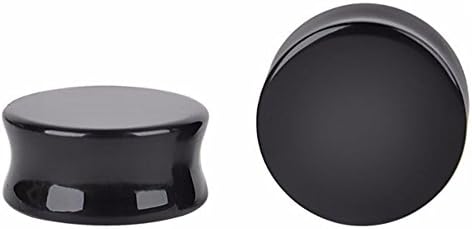
$8.99 at our storefront
Browse our collections grouped by where the jewelry rests, from navel rings to stretched ear plugs.
Hinged clicker segment rings and nose hoops at 20G, 18G and 16G.
Flat back labret posts at 16G with a disc that lies against the skin.
Obsidian, jade, acrylic and silicone plugs and tunnels from 6mm through 25mm.
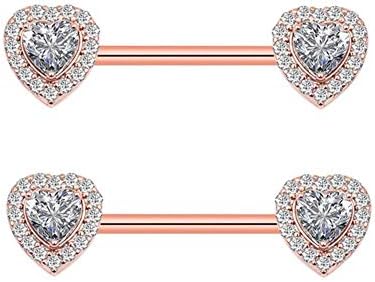
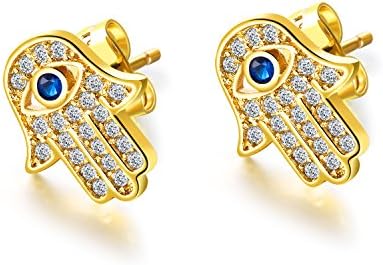
Small cartilage studs, huggie hoops and a short line of sterling silver pendants and chains.
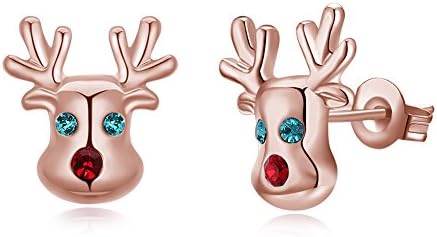
Use our size finder to narrow the catalogue by body location, exact wire gauge, and bar length in millimetres.
Wire gauge tells you the thickness of the metal post. A higher gauge number means a thinner wire: 20G is 0.8mm, 18G is 1.0mm, 16G is 1.2mm, and 14G is 1.6mm. Your jewelry gauge should match what your piercer put in your channel to prevent stretching or loose posts. A piercer can check your size if you are unsure.
Length is the second measurement. A 16G post at 6mm sits close to the skin, while the same 16G post at 10mm leaves extra room along the shaft. We machine our core barbells and clickers from 316L surgical steel, a hypoallergenic alloy ground to tight tolerances, then polish the shafts smooth before adding stones or plating.
| Gauge | Millimetres | Where it turns up in our line | Pieces here |
|---|---|---|---|
| 20G | 0.8mm | Nose & septum | 3 |
| 18G | 1mm | Nose & septum | 13 |
| 16G | 1.2mm | Nose & septum, Labret & lip | 25 |
| 14G | 1.6mm | Navel, Nipple & tongue | 16 |
Four things we get asked about the metal itself.
Our clicker hoops for nose and septum piercings use a machined pin hinge and an audible snap clasp. We make them in 16G, 18G, and 20G wire thickness with inner diameters measured in exact millimetres.
These 16G studs feature a flat circular disc base that rests flush against the skin inside the lip or ear. The front gem unscrews from the internally threaded post so the back stays steady.
We turn our stone and acrylic plugs with smooth flares that measure roughly one millimetre wider than the wearable center saddle. We list both the saddle width and overall plug length in millimetres.
Our navel curves and cartilage studs hold faceted cubic zirconia gems inside solid steel prongs rather than glue. The metal wraps around the girdle of each stone to keep it secure through daily wear.
Short pieces on gauge, length and how our findings are put together.
What gauge means
Gauge measures wire thickness in body jewelry. The scale runs in reverse, meaning higher numbers mark thinner metal posts and rings.
Length and diameter
Gauge gives you metal thickness, but the second number on our listings determines how the piece sits against your body. That number is either wearable length on a barbell or inside diameter on a hoop.
How a clicker closes
A hinged segment ring opens on a tiny steel pin and shuts with a mechanical snap. We machine our clickers from 316L surgical steel in 16G, 18G, and 20G.
Gauge measures the cross-sectional thickness of the post or hoop wire. A larger number indicates a thinner wire. For example, 20G measures 0.8mm across, while a 14G barbell shaft measures 1.6mm across.
Check with a professional piercer or measure an existing piece that fits well using a digital caliper. Measure the straight post between the balls, or measure the inside diameter of a hoop across its widest open gap.
All lengths and hoop diameters appear in millimetres. Straight posts are measured along the wearable shaft between the end balls. Rings and clickers are measured across the inner clearance, excluding the thickness of the metal wire.
This site displays our full manufacturing line organized by placement and dimensions. We do not process orders or payments directly on this site. Instead, our listings route through an external storefront where inventory is managed.
We machine specific pieces for standard anatomy. If a combination of 14G thickness and a short 5mm length is unavailable, it is because that specific combination is outside standard placement dimensions for that design.