Measuring length and diameter on body jewelry
Gauge gives you metal thickness, but the second number on our listings determines how the piece sits against your body. That number is either wearable length on a barbell or inside diameter on a hoop. Measuring across the wrong point leads to jewelry that pinches or hangs loose. Here is where our workshop takes those measurements.
Measuring straight and curved barbells
On a straight barbell, length is the distance along the post between the two end beads. It does not include the screw threads, the fixed ball, or the removable front setting. When we machine a 14G industrial bar or tongue post, we measure only the bare steel rod that sits inside the channel. The threaded ends sit outside that measurement.
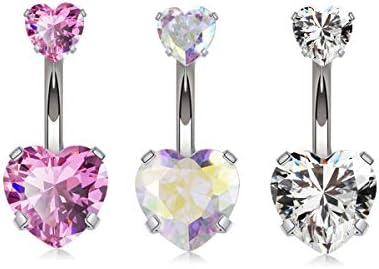
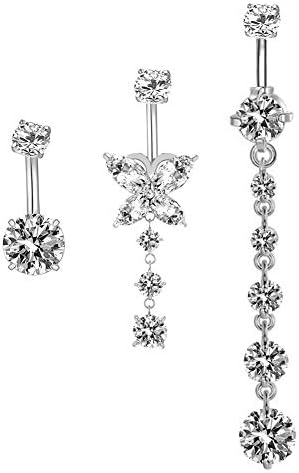
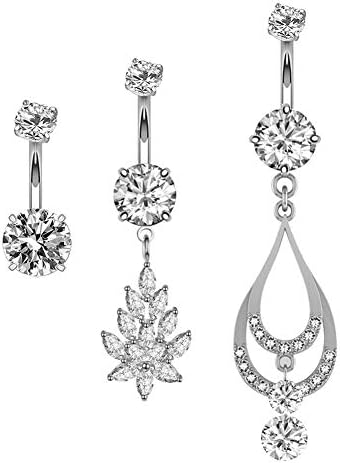
Curved navel barbells follow the same rule with one difference. We measure a straight line from the base of the top ball to the top of the bottom bezel, across the open gap. We do not bend the ruler along the arch of the 316L steel shaft. Our curved belly button rings run at a standard 10mm wearable length, which matches common anatomy.
Inside diameter on clicker hoops
Hoop sizing always refers to inside diameter, never the outer width of the circle. We measure straight across the widest open space inside the ring, from interior edge to interior edge. The thickness of the wire is excluded. A 16G clicker with an 8mm diameter has an 8mm opening, while the outer profile measures 10.4mm across because of the 1.2mm wire.
Outside diameter changes whenever the gauge changes, but inside diameter remains the constant metric for clearance. If you measure an existing hoop across its outside rims, the number will be too large. You would end up ordering a replacement hoop that drops down too far from the tissue. Stick to the inner opening when checking your current jewelry.
Nose hoop sizes and profile
Our hinged clicker hoops for nose and septum placements run from 6mm up to 12mm in inner diameter. A 6mm hoop sits tight against a low nostril piercing, creating a snug ring profile with minimal empty space. An 8mm hoop adds two millimetres of drop, which accommodates higher placements or leaves a small visible gap below the nostril rim.
Moving to 10mm or 12mm provides extra clearance for thicker septum tissue or higher cartilage piercings like the conch. The right diameter depends on the distance between your piercing hole and the edge of your tissue. A piercer can check this distance with a small metric gauge if you are uncertain between two adjacent diameters.
Flat back labret post measurements
Flat back labret studs follow the straight barbell standard. We measure the smooth post from the flat back disc to the base of the thread or push-pin socket. The disc itself is typically 4mm wide and 0.8mm thick, but that base thickness is not part of the stated post length. Our 16G flat back posts come in lengths like 6mm and 8mm.
A post that is two millimetres too long will tilt forward under the weight of a cubic zirconia cluster. A post that is too short will pull the flat disc tight against the tissue. Checking the post length on a comfortable piece you already own gives you the exact millimetre target for your next 316L surgical steel stud.
Checking jewelry you already own
Calipers give the most reliable reading on body jewelry. Lay the piece flat on a table and measure the gap between the balls on a barbell, or the inside span of an open hoop. If you only have a ruler, align one ball joint with the zero mark and read the millimetres to the next joint. Avoid cloth tape measures because they stretch.
Do not guess millimetres from memory or try to compare steel pieces to coins. Small increments alter the way a piece sits on your body. If you do not have a piece that fits correctly, visit your piercer so they can measure your piercing with standard tools before you pick a gauge, length, or hoop diameter.
The short version
- Barbell length covers only the wearable post between the beads, excluding threads and decorative settings.
- Hoop sizing measures the inside diameter across the open space, not the outer edge of the wire.
- Our 14G curved navel barbells use a standard 10mm straight-line measurement across the shaft gap.
- Measure a comfortable existing piece with calipers from inside edge to inside edge to confirm your size.